
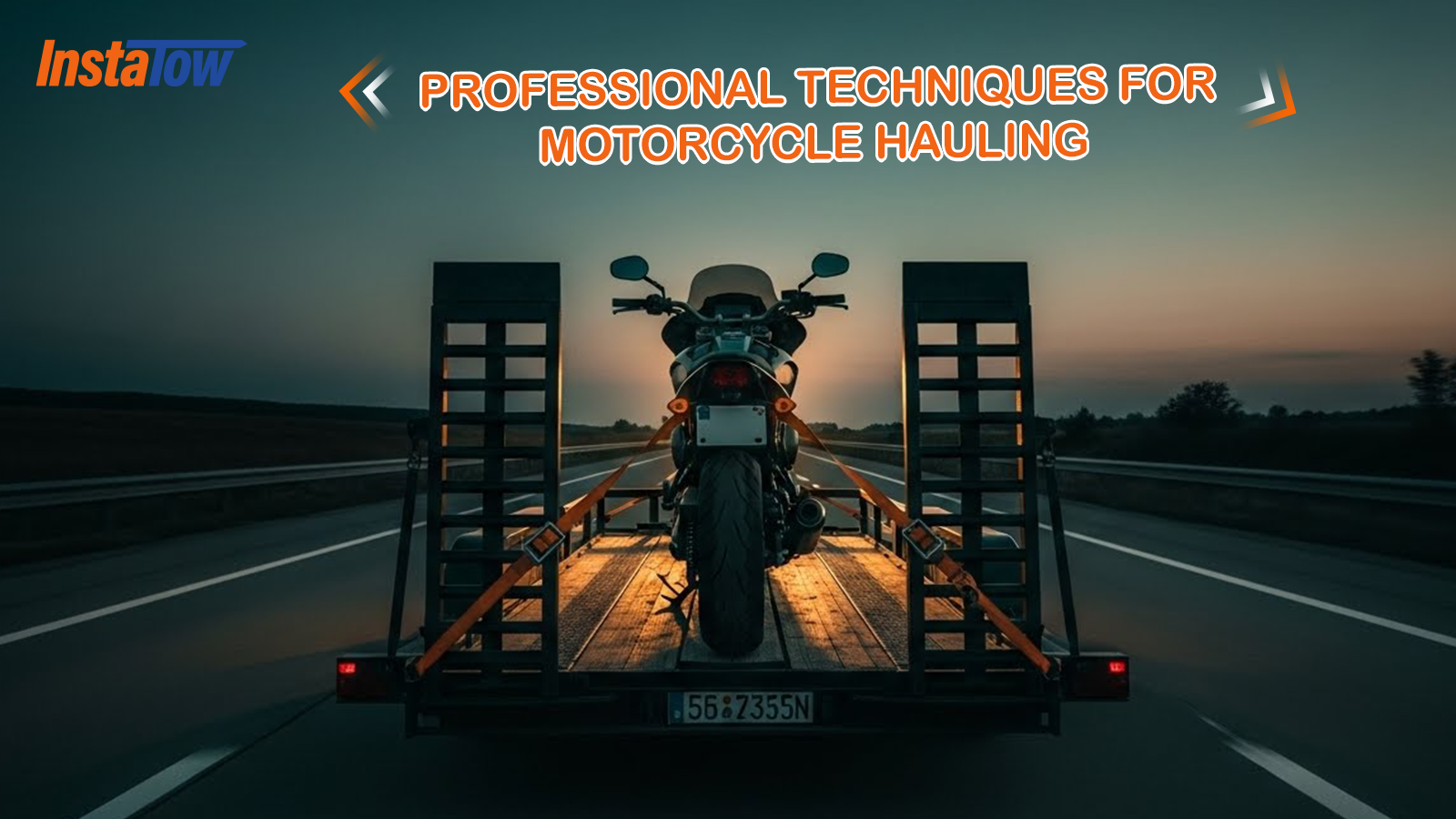
How do I haul my motorcycle?" It’s a question we hear every single day, and even veteran riders can overlook the details that the pros never miss. While the four-point tie-down is the industry standard, mastering strap placement and tension is what truly keeps your bike safe.
We’re sharing the exact methods professional haulers use so you can transport your ride with total confidence
Cost of hauling a motorcycle
The reliability of your setup depends on the strength of your components. Professional transporters never settle for hardware that isn't rated for the specific weight of the cargo when hauling a motorcycle.
Investing in heavy-duty, American-standard gear ensures that your tie-down points won't fail when subjected to the sudden G-forces of emergency braking or sharp maneuvers.
How Much to Ship a Motorcycle Overseas
Wheel Chocks: A floor-mounted "pivot" or "cradle" chock is essential. Brands like Baxley or Condor are popular because they lock the front tire in place, keeping the bike vertical so you can secure the straps without a second person.
Polyester Ratchet Straps: Professionals prefer 1.5-inch or 2-inch polyester webbing over nylon. Polyester has less "stretch" when exposed to the heat and tension of long-distance hauling.
Soft Loops: These are short nylon sleeves used to wrap around the bike’s triple tree or frame. They act as a protective barrier, ensuring the metal hooks of your ratchet straps never touch your chrome or paint.
The Securement Process: Step-by-Step
A professional-grade securement is not just about tightness; it is about eliminating the "bounce" that leads to strap failure.
Loading: Use a wide, arched ramp to avoid "high-centering" (scraping the bottom of the bike) as you transition from the ramp to the trailer bed.
The Front Cinch: Attach your soft loops to the lower triple tree—the strongest part of the front end. Ratchet the front down until the forks are compressed by roughly 1.5 to 2 inches. This ensures the straps stay tight even when the trailer bounces.
The Rear Stabilization: Use two more straps on the rear frame or passenger footpeg mounts. These should pull slightly toward the back of the trailer. Their primary job is to prevent the rear tire from "fishtailing" or sliding side-to-side during sharp turns.
How to Ship a Motorcycle Overseas: A Complete Guide
Why Handling Motorcycle Transport Alone Requires Extra Caution
Hauling a motorcycle on your own is possible, but it requires constant attention to many small details at the same time.
Strap placement, tension balance, loading angle, and equipment quality all affect how stable the bike remains during transport.
Even a minor oversight can create unnecessary stress on the motorcycle, especially during sudden stops, sharp turns, or uneven road conditions.
Handling the entire process solo—from loading and securing to checking tension during transit—also makes it easier to miss early warning signs, such as straps loosening or weight shifting.
This becomes even more critical with heavier or high-value motorcycles, where experience and proper tools matter far more.
That’s why many riders turn to professional transport services that handle motorcycle hauling every day.
Companies like InstaTow use standardized securement methods, commercial-grade equipment, and trained operators to manage these details consistently, reducing the risks that can come with transporting a motorcycle independently.
Conclusion
Hauling a motorcycle successfully is all about eliminating uncertainty. It takes a combination of high-grade equipment and precise positioning to keep your motorcycle stable and protected throughout the haul. After reading this article, you’ll know exactly how to haul a motorcycle like a seasoned professional.